
Breaking barriers, shaping science: Celebrating International Day of Women and Girls in Science
Today, on the International Day of Women and Girls in Science, we celebrate the curiosity, courage, and achievements of women shaping the future of research. From laboratories to the world’s largest sporting arenas, women are applying science in ways that improve lives, challenge old assumptions, and inspire the next generation.
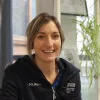
In this article, Dr Jessica Mee, UKRI Future Leaders Fellow at University of Worcester, shares her own journey. From feeling intimidated by science in school, to leading research that helps athletes perform at their best, and exploring how climate change uniquely affects women’s health. It’s a story of discovery, resilience, and the power of women making their mark in STEM.
Standing inside a heat chamber at university, drenched in sweat while measuring how the human body copes with extreme temperatures, I never imagined that years later my research would help prepare athletes for the Olympic Games, or contribute to understanding how women’s health is affected by rising global temperatures. But that moment marked the beginning of a career shaped by one belief: science matters most when it improves lives beyond the laboratory.
I didn’t grow up knowing I wanted to be a scientist. In fact, science initially felt difficult, fascinating but intimidating. At school, I was taught by an innovative and engaging science teacher who made learning interactive and accessible. Instead of memorising facts, we experimented, explored, and asked questions. That experience planted the first seed, not just that science was exciting, but that I could belong in it.
This led me to specialise in biology at A-level, which I found both rewarding and challenging. I was always drawn to learning with real-world relevance and sometimes struggled with abstract concepts. Practical work, including dissections of rats, hearts and eyes, helped me understand complex systems in tangible ways. I learned early that difficulty doesn’t mean inability; often, it simply means growth.
I later combined my interest in biology with my love of sport by studying Sport and Exercise Science at the University of Brighton. It was there that I discovered environmental physiology, studying how the body responds to heat, cold and altitude. We recreated extreme environments in heat chambers, designed experiments, and tested strategies to help the body cope. It felt like science with immediate application, and I was hooked.
That focus on real-world impact has stayed with me ever since. During my career, I’ve had the opportunity to apply my research directly to elite sport, including advising on heat preparation strategies for athletes preparing for the Olympic Games taking place in thermally challenging environments. This work involved translating laboratory evidence into practical training strategies, helping teams manage the environmental demands. Working at the intersection of research and performance also highlighted the complexity of applying science in real-world settings, where logistics, travel, scheduling, and individual variability all matter. But seeing evidence-based strategies make a tangible difference on the world stage remains one of the most rewarding aspects of my work.
Today, I am a Research Fellow at the University of Worcester and a UKRI Future Leaders Fellow, supported by the Medical Research Council. My research focuses on improving the health, wellbeing, and performance of females in thermally challenging environments, particularly heat. As climate change drives more frequent and severe heatwaves, this work has never been more important. Historically, much of what we know about heat stress, adaptation, and performance is based almost exclusively on male participants. My work aims to change this by placing females at the centre of scientific discovery and application, rather than treating them as an afterthought.
Sport and exercise science, and environmental physiology in particular, has traditionally been male dominated, from student cohorts to research leadership to the evidence base itself. But I’ve seen how powerful visible female role models and inclusive research environments can be. Working within international teams and collaborative networks has shown me what becomes possible when women are supported with opportunity, trust, and vision. Representation doesn’t just change who feels welcome in science, it improves the quality and relevance of the science we produce.
My biggest professional achievement to date has been securing a UKRI Future Leaders Fellowship, which allows me to pursue ambitious, long-term research while building a team and shaping a vision that bridges physiology, health, and climate resilience. But I’m equally proud of securing my first academic post at Bangor University as a very junior and inexperienced researcher and educator. That role cemented my desire to stay in academia, giving me space to learn, teach, make mistakes, and grow, while discovering how deeply I valued mentoring students alongside conducting research.
What continues to excite me most is collaboration. I draw enormous energy from working with supportive, inspiring academics who care deeply about their work and value mine in return. Science is rarely a solo endeavour, and I’ve learned that building strong, inclusive teams takes time, but when it works, it transforms both outcomes and experiences.
Like many in STEM, my path hasn’t been linear or free from setbacks. Academia can be competitive and uncertain, particularly for women and early-career researchers. I’ve learned that resilience isn’t about ignoring disappointment, but about letting setbacks sharpen rather than dull your motivation. Every knockback has forced me to reflect, adapt, and grow, often in ways that later proved invaluable.
For women and girls considering a career in STEM, my advice is simple. First, find something that genuinely fascinates you, not what you think you should enjoy, but what keeps you curious. Second, build your people. Seek mentors, collaborators, and peers who support your ambitions and challenge you constructively. Third, don’t confuse difficulty with failure. Science is hard, that’s what makes it worthwhile. Struggling usually means you’re learning something meaningful. Finally, be resilient, but also kind to yourself. Every challenge is part of the learning journey.
As climate challenges grow and the need for inclusive, high-quality research becomes ever more urgent, I feel privileged to work at the intersection of health, performance, and environmental change, and to contribute to science that better represents everyone it aims to serve.
If there’s one thing I’ve learned, it’s that science doesn’t belong to a certain type of person. It belongs to anyone curious enough to ask questions, and brave enough to keep going.